The Dunera
The Dunera
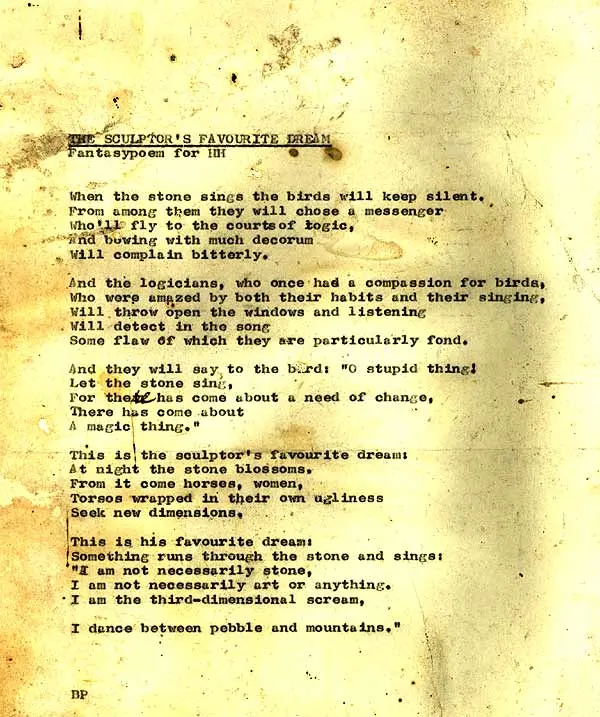
In 1939 Heinz, then Gustav Heinrich Clusmann, was a part-Jewish German sculptor living in London. Interned in 1940 as an Enemy Alien he was shipped to Australia on the notorious HMT Dunera, and held behind barbed wire at Hay in New South Wales. There he carved, taught and entertained others until, being recognised as an opponent of Nazism, he was returned to Liverpool a free man in August 1941. The talk and text below tell the story in detail.
Dunera / Australia




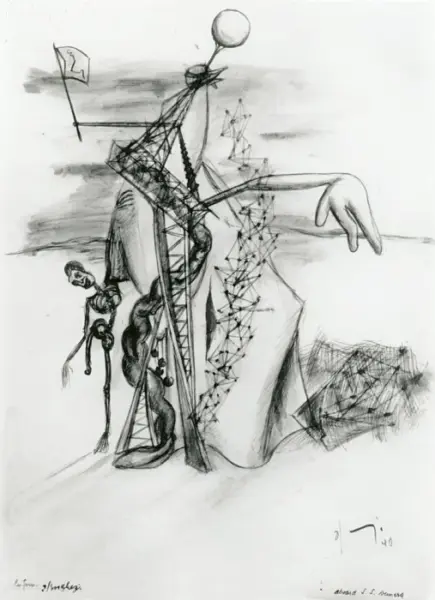
Awaiting internment
At the approach of war In 1939 Heinz was a German national living in London. Contemplating the future given his part-Jewish heritage must have been particularly stressful for him. Heinz was just one of about 47,000 refugees from Nazi Germany then living in Britain, the majority German Jews. It would be natural to imagine that Jewish refugees from the Nazis would be treated sympathetically by the British state, and hardly likely to be seen as a threat when hostilities started. Sadly this was not how things were to develop.
During the 1930’s as immigration stemming from the rise of the Nazis increased, both the most powerful newspaper barons in England, Lord Beaverbrook and Lord Rothermere, stoked anti-semitic sentiment through their papers. Under the August 1938 headline “The Wandering Jew” Beaverbrooks’ Daily Express published the following: ‘Certainly there is no room for the Jews in Britain. Where we have 1.8m of our own people out of work and biting their nails. But places must be found for the Jews. There are plenty of uninhabited parts of the world where, given a touch of Christian spirit they may yet find happy homes.’1 Rothermere went much further and directly supported Hitler. He had travelled to Germany to meet him and maintained a correspondence with him. Martin Pugh writes in his history of British interwar fascism that Rothermere was “perhaps the most influential single propagandist for fascism between the wars.”2 Rothermere’s Daily Mail was happy to repeat April 1933 assertions by Hitlers spokesman that reports of “the mishandling of Jews” were “barefaced lies”. Rotheremere was also anti-semitic in private correspondence writing “The Jews are everywhere, controlling everything”.3 A supporter of fascism, Rothermere actively encouraged the formation of Oswald Mosley’s Blackshirts, the English fascist party, and promoted them enthusiastically in his papers.
Heinz found himself summoned to the German Embassy in London where he was told he was being called up and would have to return to Germany. Surprisingly, despite the growing persecution of Jews, thousands served in the German army. Well over 100,000 ‘Mischlinges’,4 part-Jews, are estimated to have been soldiers, some even occupying senior ranks.5 Perhaps with a non-Jewish name like Clusmann the authorities in London saw no obstacle to conscripting Heinz. Either way he left the embassy telling them he would get his papers and pack, but with no intention of going back to Germany he presented himself to the British authorities and requested naturalisation. With hostilities rising this was not a request about to be granted.
When war was declared on the 3rd September 1939, previously fascist sympathetic newspapers made a sudden turn, becoming fiercely nationalistic. Looking for headlines to excite their readers they began reporting on the dangers from within; German citizens living in British society who were suspected of being ‘fifth columnists’, spies whose activities threatened British security. The Daily Mail was particularly exercised about ‘enemy aliens’ living in the county.
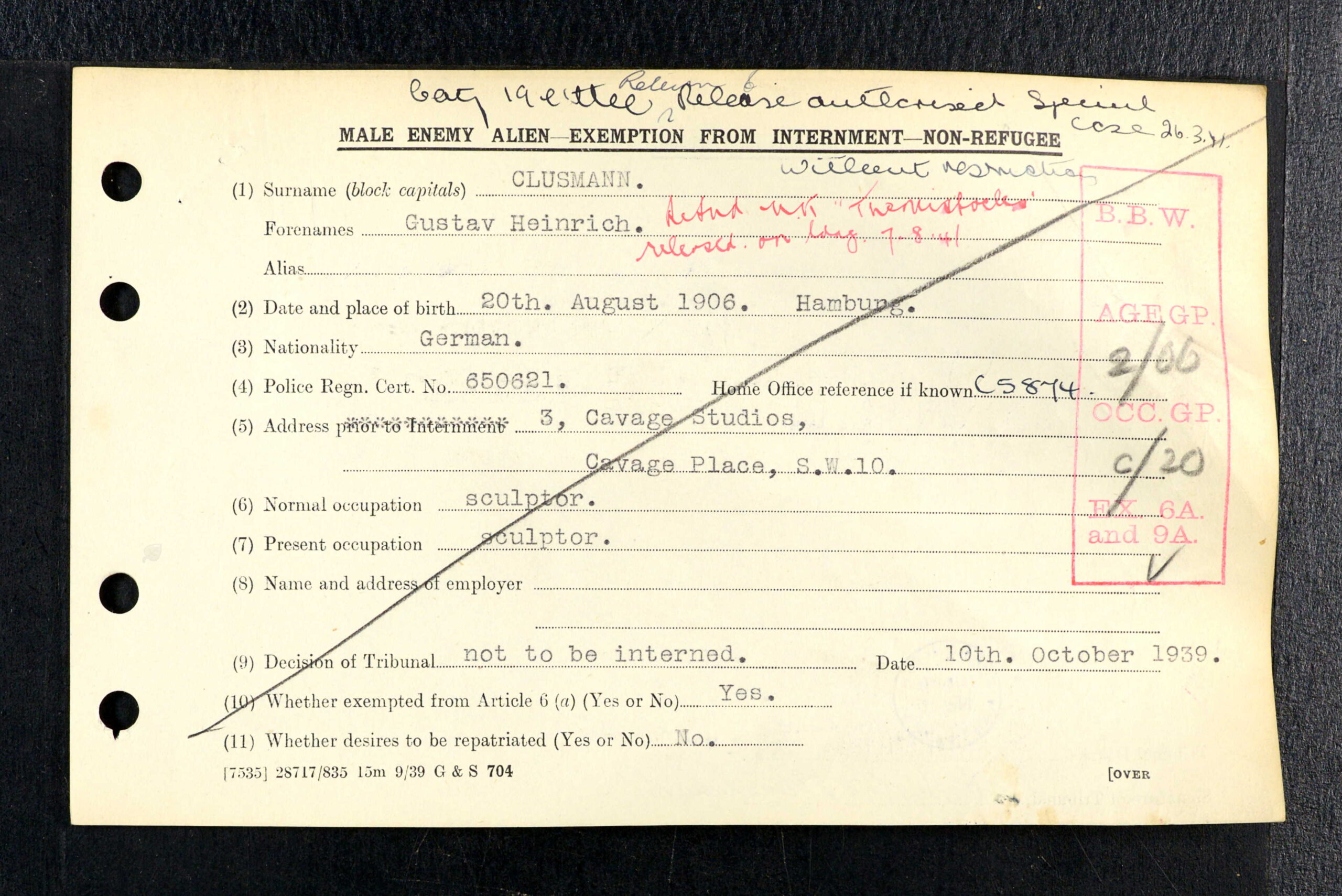
By the 28th September 1939 the Aliens Department of the Home Office had set up internment tribunals throughout the country. The tribunals were tasked with classifying the risk individuals might pose. Persons classified as Category A were to be interned; Category B, to be exempt from internment but subject to the restrictions; and Category C, to be exempt from both internment and restrictions. On the 10th October 1939 following his appearance at a tribunal it was determined that Heinz was not to be interned. He was classified as a ‘Non-Refugee’ and given a Category ‘C’ status which exempted him from restrictions. People such as Heinz were referred to by the confusing title of ‘friendly enemy aliens’.
The early months of the second world war between September 1939 and May 1940 became known as the ‘phoney war’ as there was little actual fighting. This was to end on the 10th May 1940 with Nazi Germany invading France and the Low Countries. The Daily Mail meanwhile continued its campaign of fear mongering and calling for the internment of all Germans regardless of classification. ACT! ACT! ACT! DO IT NOW! headlined an article on the 24th May of pure sensationalism by G. Ward Price in which he wrote: “In Britain you have to realize every German is an Agent. All of them have both the duty and the means to communicate information to Berlin.”
The popular press inflamed the public mood and heightened concerns among politicians. A now infamous phrase attributed to Churchill from cabinet minutes was ‘collar the lot’. On 22nd May 1940 the British government announced the imposition of Defence Regulation 18B. This legislation gave the Home Secretary the right to imprison without trial anybody he believed likely to “endanger the safety of the realm”. The next day Oswald Mosley was arrested. Between the 27th May and the 4th June over 100,000 men lost their lives or were captured by the Germans during the Dunkirk evacuation which Hitler declared to be ‘the greatest battle in the history of the world’. On the 25th June 1940 France capitulated and the same day an order was issued to intern all category ‘C’ men under the age of 70.
Recognising that internment would include those who were opposed to Hitler, Churchill said: “We have found it necessary to take measures of increasing stringency, not only against enemy aliens and suspicious characters of other nationalities, but also against British subjects who may become a danger or a nuisance should the war be transported to the United Kingdom. I know there are a great number of people affected by the orders which we have made who are passionate enemies of Nazi Germany. I am sorry for them, but we cannot at the present time and under the present stress, draw all the distinctions which we should like to do.“6
Joan Wyndham recorded in her diary meeting Heinz in the street on the 1st July 1940: ‘I asked if there was any chance of his being interned, and he looked a bit pale and said he’d expected it last week, but as it hadn’t come perhaps they meant to leave him alone. The police had taken him to the station and questioned him, but they’d let him go again. He took a cigarette, but his hands shook so much it broke between his fingers. He took out a second and it fell in the road… “The general opinion seems to be that I’ll be roped in soon. They’re not excluding anyone.”‘ 7
On the Dunera
On the 2nd July Joan had arranged to visit Heinz again to lend him her gramophone as he had pawned his own: ‘Even before I got past the garages I had a funny feeling – in a few seconds I shall know – I hardly dare look. The curtains were drawn, except in one place, I looked through. The bed was stripped. The bookcases were stripped of their ornaments. I didn’t feel or realise anything until the garage man came up and raised his hands expressively. “No good, he’s gone. They came at nine this morning. He had till eleven to get his things together. Somebody’s got his dog until he can find it a home. Poor devil, well at least he won’t have to look after himself any longer. Proper furious he was too this morning. Of course they don’t say where they’re taking him, but if I ever hear any news I’ll let you know.” I went onto the landing among the garbage cans and sat down on the stone floor. The bottom had fallen out of everything. I was faced with the unthinkable prospect of never seeing Heinz again. There were some sketchbooks stuffed in with the rubbish, one a big book of abstract drawings. I concealed them inside the gramophone and went back to my studio. I lay on the couch and thought and thought till I felt sick.’
Following his arrest Heinz was taken to Huyton internment camp near Liverpool. Huyton was an unfinished housing estate an hours walk from the station. The internees were walked through the city three abreast carrying their luggage while soldiers with fixed bayonets drove them on. Onlookers took them for the enemy within they had heard about in the press and some shouted “Down with the fifth column” and “Down with the spies”. For many who had only recently escaped Germany this was an all too painful reminder of the country they had fled.”8. Huyton had enough space for about 5,000 internees with up to 12 sleeping in each house. This was just one of a number of camps created for internees, the largest internment camps were on the Isle of Man. Racecourses were also put to use as temporary camps. Hitler reputedly said; “The enemies of Germany are now the enemies of Britain too. The British have detained in concentration camps the very people we found it necessary to detain. Where are those much vaunted democratic liberties of which the English boast?”
Because the internment program was ongoing with numbers growing fast it became urgent to make space for new arrivals at the camps. The authorities decided to organise ships to take thousands overseas. Many of those interned at Huyton were encouraged to volunteer with promises of greater freedom. Heinz was probably one such volunteer, though he may have been picked with others to make up numbers. It is likely they had been led to expect that they would be sent to Canada and have the prospect of greater freedom there than remaining in Britain.
Maritime transports in wartime were perilous as ships were targets for German U-boats. Five ships were to carry 7,500 internees overseas with the Duchess of York the first to leave on the 24th June with 2,602 people, twice her capacity, bound for Canada. The first the public knew of all this was when on the 2nd July another ship, the Arandora Star was torpedoed and sunk off the west coast of Ireland. There were just over 1,500 people on board, principally internees. Over half lost their lives.
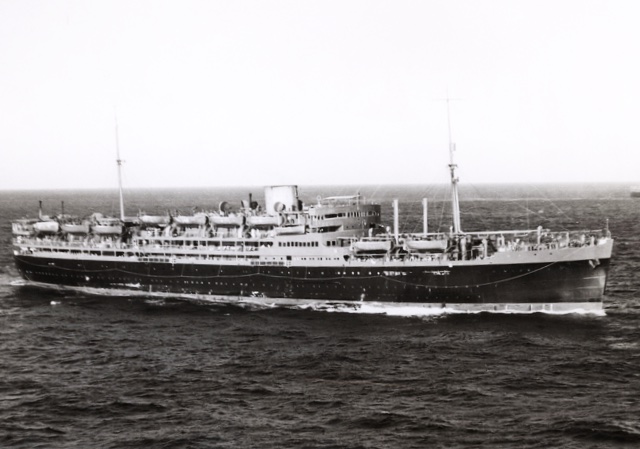
On the 10th of July His Majesty’s Transport Dunera, a 12,615 ton vessel built in 1937, stood berthed in Liverpool. Built to carry a maximum of 1,600 she was to take onboard 2,542 with Heinz one of their number. There were German and Austrian ‘C’ class internees along with 200 Italian fascists and 251 Nazi prisoners, both ‘A’ class internees. Some of the passengers were survivors of the Arandora Star and the last thing they expected or desired was to be put back on another ship having so recently escaped with their lives.
There was little information given to internees, and many who sailed on the Dunera had not volunteered to go overseas at all and had little idea what was happening to them. One internee, Heinz Koppel gave the following testimony: “I was one of 320 men coming from Lingfield Racecourse…destined for Huyton Camp, near Liverpool. We were redirected on to a railtrack leading to the dockside and promptly bundled on board ship”. He later learned that 320 evening meal rations had been prepared at Huyton for the men who never showed up. 9
Another man, Sigurd Lohde, arrived by taxi on the dockside as internees were boarding the Dunera. He had a steamer ticket to the Isle of Man as he had been appointed as a German interpreter to one of the internment camps. Despite this he was ordered at bayonet point by a British soldier to board the ship, his protestations coming to nothing. Lohde was a well-known Austrian actor. He even carried a letter confirming his appointment!10
Soldiers on the ship treated the arrival of the internees as an opportunity for self-enrichment, forcibly taking anything of value. Suitcases were ransacked and heaped up, some cut open with bayonets, and various items thrown overboard. Moritz Chlumecky came onboard carrying a violin in a case. He explained that it was precious and belonged to his son, but it was roughly taken from him and thrown overboard. Enough luggage was thrown into the sea that during the voyage the lyrics of ‘My Bonnie lies over the ocean’ were changed to ‘My luggage went into the ocean’, continuing with the refrain ‘bring back, bring back, oh bring back my luggage to me’.11
Alfred Lewinsky in his diary gives a vivid first impression of what it was like for the internees boarding the Dunera: “A long jetty. Policemen. Hand over all knifes and tobacco.
Lots of shouting. The first soldiers. The drama begins. People are searched. Tefillins torn away bags taken. Also valuables. Watches stolen. Straight into Soldiers pockets. Every Solider seemed drunk. More and more Soldiers. First Trunks broken open. Officer present. Incredible greediness in their eyes. The ship. Too big for my liking, yet not big enough really. Up the Gangplank. More soldiers. Barbed wire. Incredible noise. More searches. Especially watches and rings. Trunk thrown on heap. Soldiers about to break some open and searching. One man handing over jewellery to Officer. Big and fat. Shouting. The first bayonet stabs. Kicks with rifle butts and fists for everybody. Over the deck. Down stairs. Along rows of soldiers into a big room. Seemed already full. Long Tables along each side with benches. Called Messes. We find room on Mess 35 fortunately all together near the end on the light side. Soldiers everywhere. Sergeants tell us to empty all our things onto the table. Everything valuable was taken including watches. My fountain pen went west. Sergeant said “If you are fair with us, we will be fair to you” (nebbich). All things were taken into the Sergeants caps after carefule first picking out things which looked nice into a sack and taken away. Documents were torn up, identity cards taken away. Affidavits thrown away etc. “12
The overcrowding on the Dunera was extreme. There were some hammocks but many had to sleep on big wooden tables or on the floor. There were slop buckets which were soon overflowing with urine. No fresh water, and the food was barely edible.
Willy Hirschfeld (later Field) was one of those who had not volunteered to be sent overseas, but just found himself onboard the Dunera having initially been interned at Kempton Racecourse. He remembered a particularly frightening moment on the voyage. “On the second or third night of our journey we experienced a very loud crash. Confined below deck, we had no idea what it was, although we suspected it to be a torpedo. The ship rocked. All hell broke out. People panicked and tried to get to the exits but these were locked. We were later told that we had been the target of a German submarine. The torpedo had failed to go off and we were saved. There would have been no chance of us ever getting out of the ship had disaster struck.”13 A second torpedo was also fired in this incident but missed the ship.
The torpedo which failed to detonate was fired from the U-boat U-56 commanded by Kapitänleutnant Otto Harms. A second torpedo was also fired but passed under the Dunera. U-boats were submersibles rather than true submarines operating at or a little below the surface. They could not remain fully submerged for any length of time and would fire torpedoes only when targets could be directly sighted.
Internees were not allowed to move freely around the ship. Klaus Friedeberger was near the front of the boat in the same area as Heinz and recalled that the men did the best they could to keep their spirits up organising talks on different subjects. Heinz had somehow managed to hold on to some photos of his sculptures and he used these as part of a talk. Ray Martin (the orchestra leader and composer, born Kurt Kohn) played the guitar and made up songs as well as playing popular songs of the day. Choirs and singing were an important way for people to keep up morale. Heinz sang unaccompanied Negro spirituals, the blues ‘Careless Love’ and excerpts from Gershwin’s opera Porgy and Bess which he knew from New York. Someone called ‘Boxer’ chimed in with Broadway hits like ‘Begin the Beguine’, ‘In My Solitude’ and ‘Ride, Tenderfoot, Ride’.14 Jewish holidays were observed by Rabbis. ‘They never had such a captive audience’. Klaus commented. Rabbis would stand in light wells with the internees gathered by the railings on the decks above them to ‘hold forth’.
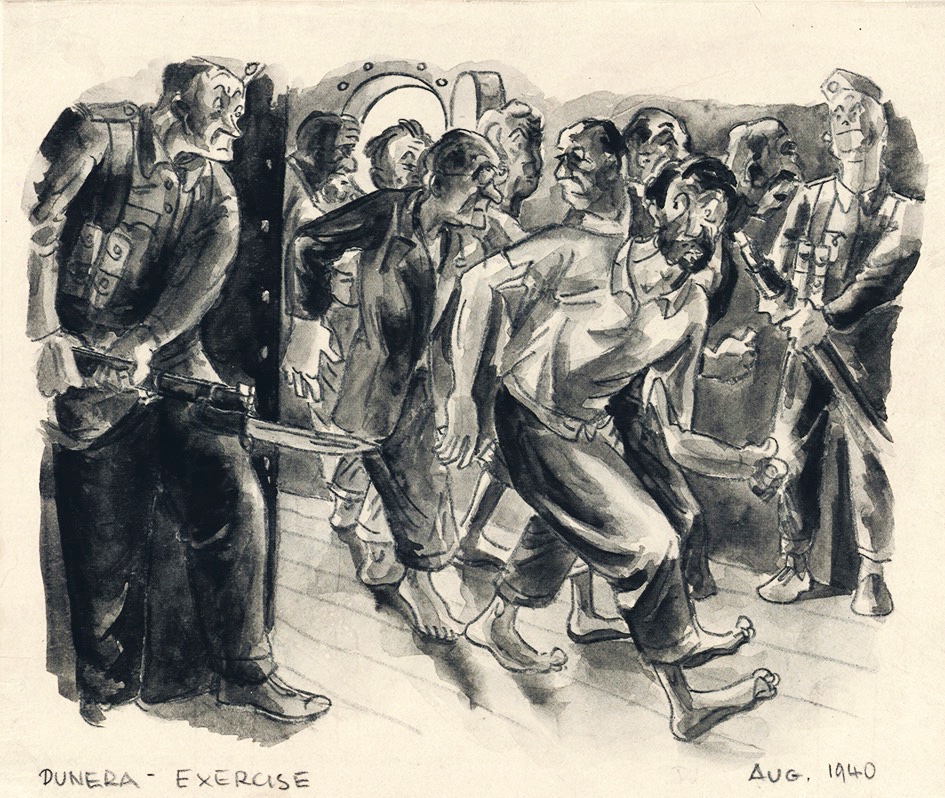
Another internee provides further testimony of life on the Dunera: The portholes on the deck were kept shut for the whole of the journey. During the first week the air shaft was covered on top and therefore useless and for over a week we were not allowed on deck at all. There was approximately one square yard per man, which made it literally impossible to move one inch without bumping into somebody. Then, when were were right out in the open sea, we were permitted to go on deck for 30 minutes each day. There were sentries standing everywhere, and we were not permitted to stop but had to keep moving. Machine guns were posted at each end of the ship, and frequently the soldiers amused themselves by standing there, finger on trigger, nozzle pointing towards us.15 … The guards were recruited from the Auxiliary Military Pioneer Corps and a Yorkshire regiment. They had all been at Dunkirk, and most of them had something to remember that a glass eye, shell-shock symptoms, fingers missing etc., altogether a forbidden looking crowd. The officers were not much better. Most of them didn’t care tuppence what men did, but were drinking all day; the rest, led by Lieut. O’Neill, were inciting the soldiers to fresh deeds. O’Neill had come up from the ranks, he had been in the last war and wore a V.C. He was the only one we actually hated, and later when he came to visit our camp at Hay, N.S.W. His appearance almost created a riot and he had to leave in a very unceremonious hurry. 16 … About a fortnight out from Liverpool, the deck leader whom we had elected from amongst ourselves summoned the whole deck to the stairs and announced that he had been told by the commander that our destination was AUSTRALIA. There was silence when he had finished, and I looked around at the ragged crowd standing around me, Australia, on the other side of the globe, a six weeks journey as the deck leader said, but it might be more… Crossing the equator, going through the tropics in that crowded ill equipped ship, without even a change of clothing, without soap and washing utensils… Silently we dispersed, everybody thinking of the people he left behind, of his hopes and plans for the future, and of the weeks ahead...17
Meanwhile in Britain between June and August of 1940 there were only four days of parliamentary business during which ‘enemy aliens’ were not mentioned. The publicity surrounding the sinking of the Arandora Star combined with questions asked in the house brought about a change in policy. As Mr Strauss MP put it “To intern these people, great fighters for democracy, was contrary to common sense and to England’s finest traditions”. Internment, which had started on the 25th of June was only to last three weeks. Category ‘C’ people who lived in areas with larger proportions of aliens were never interned as the police had not had time to get round to them all. Questions about the treatment of internees and the circumstances surrounding their deportation were asked. The government blustered and was either misinformed or dishonest in responses. As an example on the 22nd August, Osbert Peake, Under Secretary of State for the Home Department made the following statement in Parliament “As regards shipment to Australia, which is the only shipment for which the Home Office is directly responsible, there is perfectly conclusive evidence that 90 per cent. of those who went there were anxious to go there.” White papers were drafted which allowed for the release of different categories of internees; those with special hardship or of greatest service to the war effort, those prominent in opposition to the Nazi system, and all those who could contribute to science, learning, literature and the arts.18 Despite this shift in policy the Dunera continued its course towards Australia.
As the Dunera approached its final destination Lt-Col W.P. Scott realised that there would be complaints about the treatment of the internees and the loss of belongings. In an attempt to preempt this by casting doubt on what might be said he wrote to the Australian military authorities:
I would like to give my personal views on a) Nazi Germans, b) Italians, and c) German and Austrian Jews.
A) having warned this group prior to sailing of my methods should trouble arise through them, their behaviour has been exemplary, they are of a fine type, honest and straightforward, and extremely well disciplined. I am quite prepared to admit however, that they are highly dangerous.
B) Italians. This group are filthy in their habits, without a vestige of discipline, and are cowards to a degree.
C) can only be described as subversive liars, demanding and arrogant and I have taken steps to bring them into my line of thought. They will quote any person from a prime minister to the President of the United States as personal references, and they are definitely not to be trusted in word or deed.
Hay
On the morning of September 6th 1940 the Dunera steamed into Sydney’s Darling Harbour. Heinz, AKA Internee E76221 Gustav Heinrich Clusmann and his fellow travellers had arrived in Australia. Three of those who had set out with him from Liverpool had lost their lives on the journey. One man had committed suicide by jumping overboard. He had papers for immigration to Argentina which a solider tore up in front of him. One died in the hospital berths and one was supposedly involved in a fight on board and died of his injuries.
Having realised that sending people who presented no threat to Britain to the colonies was not the best idea, the British government suggested to Australia that it might ‘apply a less rigid custodial treatment to genuine refugees from Nazi oppression’. The Australian government cabled a reply which stated that it expected all internees to remain interned until returned to the United Kingdom’… ‘The Commonwealth is not (repeat not) prepared to accept for internment in Australia any aliens who would not, in ordinary course of events, be considered sufficiently dangerous to warrant internment in the United Kingdom’. It was a bit late for such a distinction to be applied, so Australia proceeded with the planned internment of the arrivals. 19 The Australian press was quick to print stories about them being dangerous men, reporting that there were parachutists, prisoners of war and ‘hundreds who had been carrying out subversive work in England’.
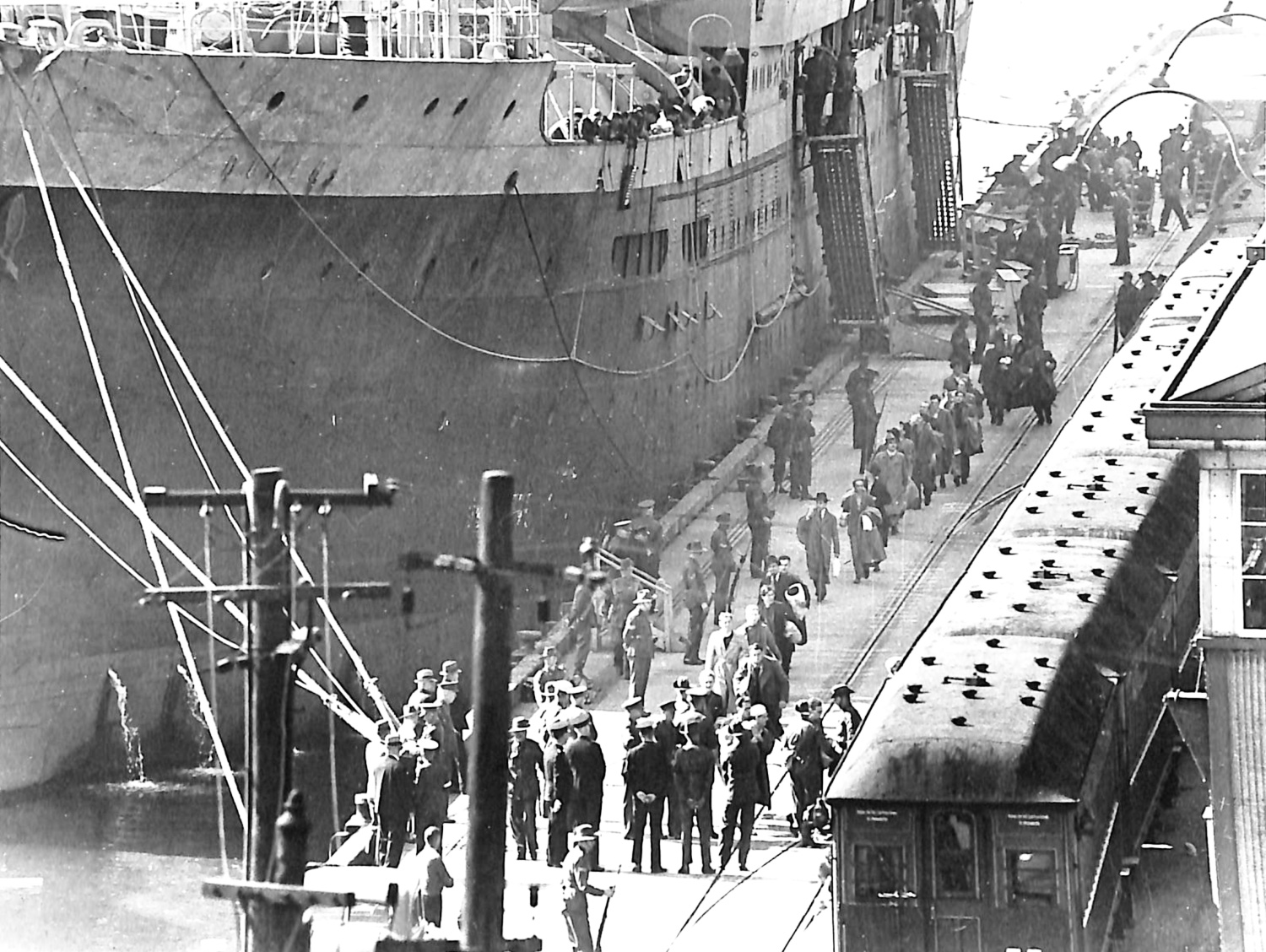
A train stood at the dock alongside the Dunera, the first of four that would be required to cope with the number of arrivals. Once on board the internees were given cardboard boxes with food. It was ‘like going to the Ritz’ after what they had become accustomed to on the boat. It was immediately evident that the Australian soldiers did not exhibit the hostility of their British counterparts on the Dunera, instead being curious about the people they had been given to guard. Klaus Friedeberger recalled that in each compartment there was a ‘digger’ with a rifle. They were relaxed enough that one even asked an internee to hold his rifle while he rolled a cigarette.20 The train chugged through a landscape of dusty scrub and through the night. Waking up in the morning there were kangaroos hopping along beside the carriages.
After 18 hours the train arrived at its destination: Hay. An isolated place 720Km west of Sydney. On first impression Hay felt to Klaus like the end of the world, with nothing beyond. Werner Pelz gave us the following description “Around us was the desert, blind, cracked, birdless, treeless, dust merging into dust, flatness into flatness, all into the haze of an indistinct horizon where sky and earth were neither severed nor joined.” 21
There were two camps awaiting the internees numbered 7 and 822. Klaus and his companions were each given a thick corned beef sandwich which he described as ‘heaven’. Meanwhile Willy Field was enjoying Spaghetti and macaroni which cooks had prepared expecting the arrival of Italian prisoners of war. The two camps were only 200 meters apart, but shielded from each-others view by a solid fence.23 Each camp was surrounded by barbed wire and had four watch-towers occupied by soldiers armed with machine guns. Initially camp 7 was not finished enough to accommodate all who were assigned to it. Klaus & Heinz were to be in this camp but had to sleep in camp 8 and walk across for meals until the work was done. Once complete 962 internees shared the camp and from that point on the two camps became entirely separate. Camp 7 was known as the ‘Jewish’ camp. Its occupants tended to disassociate themselves from their former homeland and gave more preference to the English language than those in camp 8.An Australian saying is that the two hottest places are Hay and Hell. When they arrived in September it was spring in the southern hemisphere. Nights were freezing cold and daytime warmed up a lot. By January the heat was unrelenting. There were a lot of sandstorms. Huts were built so that the tops were open for ventilation. When the reddish sandstorms came everything was blanketed and the sand got into the huts, so afterwards everyone had to shake out their bedding. There were also terrible downpours at times which would quickly make the ground muddy. The local inhabitants were curious about the new arrivals from Europe and would come and look at them through the barbed wire on weekends.
There were 36 huts in camp 7. Heinz was in hut 25. His companions included Hein Heckroth, a set and costume designer who had worked with the German National Ballet and at Glyndebourne. He and Heinz formed a friendship which was to endure following their return to the UK when Heckroth was to go on to work with the filmmakers Powell and Pressburger on films such as A Matter or Life and Death and The Red Shoes. Simon Hochberger, another occupant of the hut was a journalist who wrote and directed some of the entertainment in the camp. A poet and author he was to have a brief career after the war in New Zealand where he died in 1947. Albin Stübs was an author and playwright whose plays were to become popular in Hamburg in the 1950’s. In a letter from camp 7 he said he was “lucky enough to get a hut with some artists and theatre people, a most interesting lot.” Another little-known writer with them was Justin Steinfeld whose only novel about pre-war angst Ein Mann Liest Zeitung was published posthumously many years later. Gunter Hirschberg was to become Cantor after the war at a synagogue in Brooklyn.
Flies were a constant annoyance in Hay and could not be kept out of the huts. They greatly troubled Eugen Rosenberg, a slovak architect who had worked with Le Corbusier and now also found himself in hut 25. Rosenberg decided to tackle the problem and made an elaborate fly trap. His endeavour was undermined by Heinz & others who caught flies and put them through a little hole bypassing the trap. Rosenberg was mightily annoyed when he discovered their fun. 24
Camp life was soon well organised with a whole system of self-administration put in place. A camp university was set up and became very active with many learned men offering different courses. Politics, philosophy, art, sculpture, 25 anthropology, chemistry, poetry, film making, literature and mathematics were all on offer, even atomic research, astronomy and theology. The busiest classes were in languages which included many European languages, Chinese, Japanese, Latin and Classical and Modern Greek.
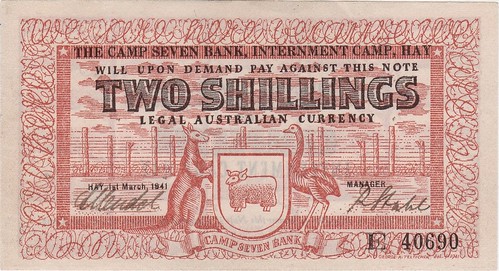
There were also many practical activities undertaken such as shoe repair and rudimentary dentistry. A currency was issued in camp 7 designed by George A Teltscher in two shillings, one shilling and sixpence denominations – ‘we’re here because, we’re here because we’re here because we’re here’ may be indistinctly read in the barbed wire border surrounding kangaroos and other motifs.26 Notes were serially numbered, and looked convincingly like real currency. Most highly paid in this currency by the camp administration were the least desirable jobs. Latrine cleaners earned five shillings a week, kitchen workers two shillings, waiters one shilling. The camp spokesmen, librarians and teachers were all unpaid. A Sydney newspaper published a reproduction of a note which attracted the attention of the law. There was concern that its use was a breach of Commonwealth currency legislation, so it was duly withdrawn.
Each camp was soon publishing magazines. In Camp 8 the Camp News was predominantly in German. Writers with a generally socialist outlook supported German resistance in ‘the other Germany’. The magazine reported on the activities of the camp including a December performance of Goethe’s Faust in its original version led by Max Meyer who also composed a Dunera Mass. Meanwhile in camp 7 The Boomerang was predominantly in English. A leading article entitled ‘Our Future’ included the following passage: ‘In order to succeed against tremendous odds, we shall have to break away from our German-trained mentality, pare off all that is too ostensibly “continental” in our behaviour and adopt the English or American outlook on life.’27
With the many creative and talented people in the camps, willing performers came together to stage entertainment. A camp 7 theatre was founded by Simon Hochberger from hut 25. Two months after their arrival in Australia they produced a play with music called Hay- Fever. A stage curtain was designed by Hein Heckroth. Klaus Friedeberger along with three others worked on scenery. While there was no piano there were violins, accordions and a saxophone. A programme handwritten on coloured paper by Hochberger detailed the entertainment.28
Ouverture Four Funny Fellows On Accordeon (Gross, Löwenhaard, Wurmser, Altmann) The Vagabond Snipers (Federn, Wurmser) MAN and Cigarettes (K. Levy) Optimist and Pessimist. Scetch by Maas (Komorner, Maas) Some Music on an Accordeon (S. Cohn) Entre’Acte Tango (Pietruschka, Silberstein, Löwenhaard, Cohn, Gross) The Illustrated Phrase-Book (Komorner, Siho) Three Niggersongs (Clusmann, Cohn, Saxophon: Adler) Csardas by Monti (Pietruschka, Cohn) Selected Melodies (Pietruschka and his Band)
‘Hay Fever’ was to be followed in February with a revue titled Trips and Onions; in March, a Show without a name (with Tartini’s Devil’s Trill Sonata played by Pietruschka and folksongs with Clusmann); in April, an evening of entertainment and, to conclude, another revue, Wir reisen um die Welt [We travel round the world] with music by Hans Katz performed by a nine-piece orchestra.29
Peter Stadlen, also in camp 7, was an established concert pianist who initially had no access to a piano. He was lucky to be well enough known for the camp commander to allow him to leave the camp accompanied by a guard to play a church organ. In March 1941 a not particularly good rental piano was provided in the camp and Stadlen was able to practice on that and even gave some recitals.
Klaus Friedeberger spoke of a lens grinder from Berlin called Hans Meyer, another occupant of hut 25. One day Klaus was present when Meyer was walking past Heinz and paused for a moment noticing he was carving dark red gum wood into an abstract, surrealist style sculpture. Meyer commented wryly ‘doesn’t it fit in the stove yet?’
Klaus was only 18 when he was at Hay, and just starting to make his way in life. Heinz was a practicing artist in his 30’s who Klaus found somewhat forbidding, describing him as a bit distant; absorbed in his thoughts. Heinz had long dark hair and was an impressive man in the younger man’s eyes. It seemed unlikely to Klaus that a man like Heinz would sing, but he did this very well. A line from one song that particularly stuck in Klaus’ mind was ‘Once I Wore my Apron Low’ from an American blues song ‘Careless Love’.
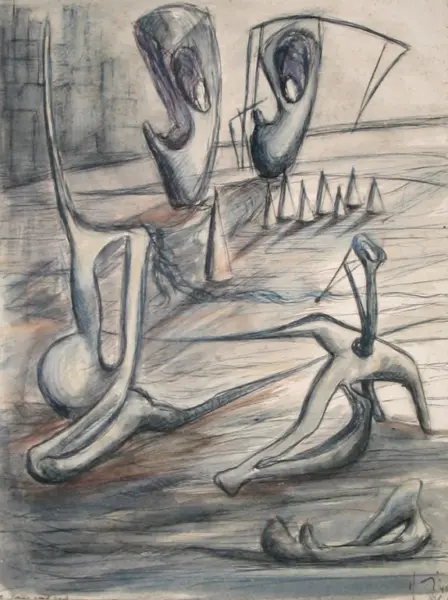
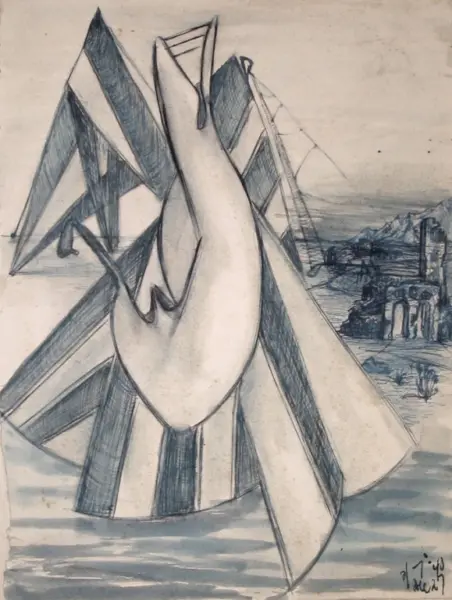
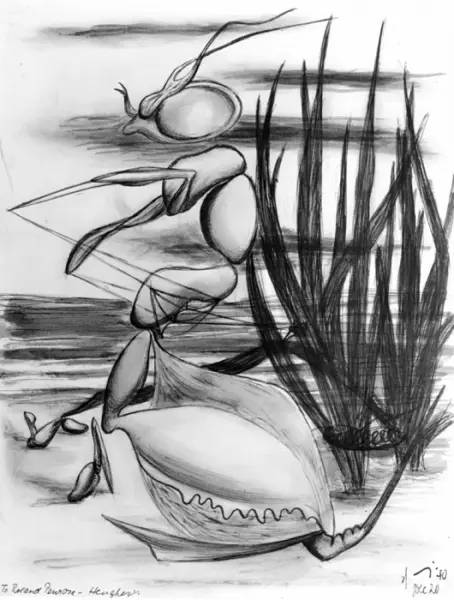
Klaus studied drawing with Heckroth who he was later to describe as a very different sort of person to Heinz. A big, outgoing, noisy man and a born teacher. Erwin Fabien, a brillant draftsman and graphic designer was also also in camp 7. Klaus gained greatly from the artists around him in honing his own artistic skills as he got structure and impetus. Surrealism was very much in the air at this time. Heinz made surrealist ink drawings and Klaus did surrealist work too.
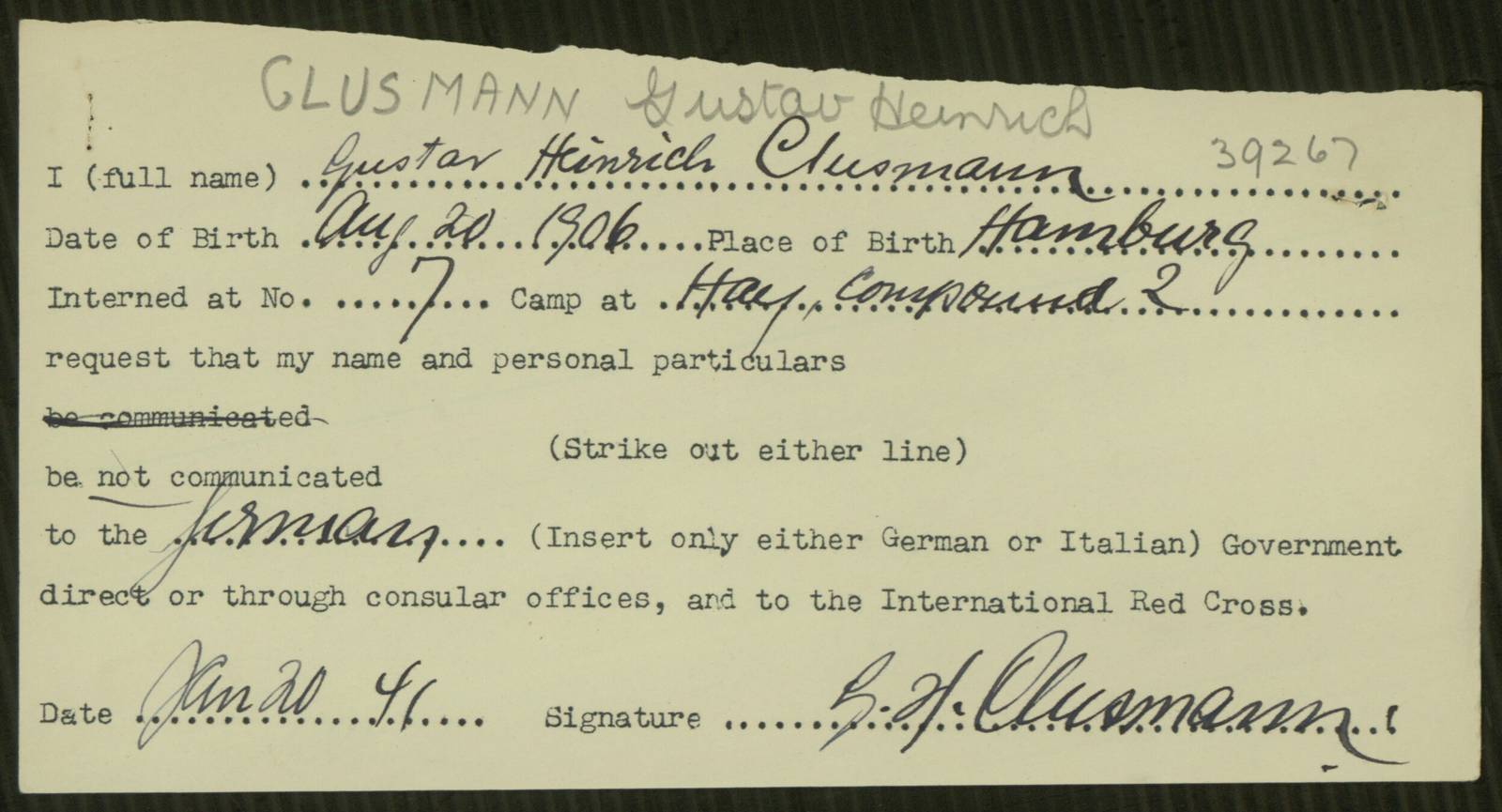
When first at the camp the internees were given official paper for writing letters which was designed for prisoners of war. There were complaints about this, and after some time other paper was provided. Many letters and representations to authorities were written by the internees. A number of statements detailing mistreatment whilst on the Dunera were prepared by a legal department formed by the internees of camp 7 for presentation to the authorities, along with a detailed general account of what had befallen them. Individuals also wrote letters to those who they hoped might make representations on their behalf in Britain. Hans Rosenbluth from hut 26 in camp 7 who was secretary for the camp and head of the camp post office was kept busy with correspondence. One such letter was sent by Justin Steinfeld who was in hut 25 with Heinz to P.E.N. (the Poets, Essayists and Novellists association) in London asking that they intercede on behalf of the internees:
Here in Australia many authorities and possibly the whole of public opinion do not believe that we are refugees from Nazi oppression but consider us to be highly dangerous, hostile and evil men as – otherwise – we should not have been sent to this camp in Australia.30
It is impossible for me to know each single man of those interned here. But I know definitely that we are all refugees from Nazi oppression, that we are all friends of the British nations, that we all stand in loyalty to the British government. It is a grave disaster, that so great a misunderstanding should be prevalent in this matter. I beg you to accept my word of honour, that with all this I am expressing the truth.
There was such a volume of correspondence around internment being processed by authorities back in the UK that Osbert Peake was to say in Parliament that ” the release of those who fall within the categories [of eligibility for release] would be greatly accelerated if correspondence could be somewhat diminished.” Representations, especially from those back in Britain did have an impact and Major Julian Layton, a British Government envoy, was duly despatched in January 1941 to review the status of internees in Australia and determine who might be returned to Britain and released. At this time the Australian government was not prepared to see any releases on their soil, writing that they would “comply with any request to release them, provided that the persons concerned are kept in custody until a vessel is available to take them from the shores.”
Layton was himself Jewish and had previously been tasked with arranging for the immigration of Jews from Vienna following Nazi expulsions. Before his arrival notices were displayed in the internment camps calling for volunteers for the Pioneer Corps to support the war effort through non-military service. Layton arrived in Sydney on the 24th of March 1941. A contributor to The Boomerang wrote “I can hardly imagine a man who would be better suited for this job. He has devoted much time to refugee work, and has become widely known in Bloomsbury house [a hotel taken over by a refugee organisation] as an agile and intelligent man whose sympathy and generosity never failed”. Layton arrived in Hay just as there was a dust storm. This meant keeping ones mouth shut until it had passed. When it became possible to speak he asked to see the kitchens and found them covered in dust. He quickly determined that Hay was not a suitable camp for Europeans and soon arranged for the internees to be moved to a camp at Tatura where the climate was less harsh.31 Reporting on what he found he wrote: “Hay is situated in one of the most inhospitable parts of the State, the surrounding country for hundreds of miles being virtually desert for the greater part of the year. […] It seems that this uninviting district must have been chosen for the reason that should any internee manage to escape, his only means of survival would be to keep to the river.” Under the heading ‘Personal Problems’, he added how the men were suffering from being designated as ‘dangerous enemy aliens’.
Heinz was assessed on the 26th March 1941.32 He had published articles which were clearly against Nazi Germany, including three in the anti-war Adelphi magazine during 1939. This combined with supportive statements notably from Herbert Read meant that he was classified as eligible for release as ‘category 19’. The criteria for this category stipulated: “enough was known of an individual’s history to show that by his writings or speeches or political or official activities he had consistently, over a period of years, taken a public and prominent part in opposition to the Nazi system and was actively friendly towards the Allied case.”
Twelve internees had been returned to the UK shortly after arrival in Australia, but for other, repatriation to England only began on the 2nd June 1941 when 139 sailed in ‘Largs Bay’, followed by 58 two days later in ‘Themistocles’ including Heinz. There were three more sailings in 1941 and another 298 returned the following July also on Themistocles. The total number who had returned by the start of January 1943 was 1141. 47 lost their lives on the journey back due to enemy action, among them the author Ulrich Boschwitz.33 The return journey was altogether different to the outward one. No longer were the internees treated as prisoners, instead they mixed freely with the crew and joined with them in talks and performances. One such was ‘South Sea Sappers Serenade’. The programme for this shows that Heinz gave a ‘recitation’ and was also responsible for ‘Doubtful Ditties, Illustrated Sketches’ along with Hein Heckroth.
Heinz arrived back at the port of Liverpool on the 7th August 1941. Stepping onto the quay he was once again a free man. Churchill was later to describe the Dunera episode as ” a deplorable and regrettable mistake”.
Notes
1 The Dunera Scandal, Cyril Pearl P. 1 ↩
2 From The Times of Israel https://j.mp/3eJKEfq ↩
3 From The Times of Israel https://j.mp/3eJKEfq ↩
4 A ‘Mischlinge’ is someone of part Jewish origin. Heinz was a ‘1st degree mischling’ being half Jewish ↩
5 ‘The Jews who Fought for Nazi Germany’; Ellen Feldman https://www.tabletmag.com/sections/arts-letters/ articles/ellen-feldman-nazi-germany ↩
6 From Dachau to D-Day (Helen Fry) P 51 ↩
7 Extracts from Joan Wyndham’s original diaries ↩
8 The Vanished Musicians Pg 221 ↩
9 ‘The Scandal’ (Cyril Pearl) ↩
10 ‘The Dunera Scandal’ (Cyril Pearl) P.20 ↩
11 The Vanished Musicians Pg 223 ↩
12 The Dunera Affair P. 161 ↩
13 Helen Fry: From Dachau to D-Day, the biography of Willy Field (Helen Fry) P. 57 ↩
14 The Vanished Musicians P. 225 – The passage starts ‘Among the numerous versatile and educated men on board the Dunera was Gustav Clusmann, a sculptor from Hamburg who has moved in surrealist circles in New York, Italy and France.’ ↩
15 The Dunera Affair, P. 169 ↩
16 The Dunera Affair, P. 170 ↩
17 The Dunera Affair, P. 171 & 172 ↩
18 ‘The Dunera Scandal’ (Cyril Pearl) P.50 ↩
19 Cyril Pearl, The Dunera Scandal P51 ↩
20 Much the same story of an Australian soldier is told by different people. It seems unlikely that there were multiple instances of soldiers asking internees to hold their rifles while they rolled cigarettes. More probable is that however this account started, it was picked up in the ‘collective memory’ as epitomising the much more relaxed attitude of the Australians compared to their British counterparts, so recently left behind on the Dunera. ↩
21 Exile, The Lives and Hopes of Werner Pelz by Roget Averill P100 ↩
22 Camps 1 to 5 were never built, Camp 6 at Hay was used by Italian civilian internees in late 1940 and then Japanese prisoners of war in December 1941 ↩
23 Carol Bunyan explains that camps were supposed to be built a mile apart for security reasons. “That wasn’t the case for Camps 7 and 8 and rules were ignored for practical reasons – ability of the local council to provide power and water, sullage and cost. Other rules were also broken such as co-location of Garrison accommodation and admin. The slanting of the internee sleeping huts, placement of some other building inside and outside the camps plus the wall erected, designed to keep occupants of the two camps out of sight of each other.” (From an email 2nd Oct 2021). ↩
24 from an interview with Jim Cadbury-Brown ↩
25 Sculpture lessons were likely given by Heinz and one or more of the three other sculptors in Camp 7 (Bruno Simon, Rudolf Neufeld and Herbert Schwarz). It is known that clay taken from beneath the huts was used for modelling. ↩
26 ‘We’re here because…’ Was a song which originated on the battlefields of the first world war. On the reverse of the notes wooly sheep have the names of some internees hidden in their fleeces. ↩
27 The Vanished Musicians P. 260 ↩
28 from The Vanished Musicians P. 261 ↩
29 The Vanished Musicians P. 262 ↩
30 Those on the Dunera who were Category ‘A’ German and Austrian internees classified as dangerous or potentially so, (being for the most part Nazi’s) had been disembarked in Melbourne to be taken to a camp in Tatura before the remaining majority sailed on to Sydney to be disembarked and taken to Hay. ↩
31 The Dunera Scandal P. 141 ↩
32 The application for release from internment was assessed in London. Major Layton was primarily focussed on facilitating release through recruitment to the Pioneer Corps. ↩
33 Ulrich Alexander Boschwitz was only 27 when the MV Abosso on which he was returning to the UK was torpedoed and sank. He had written ‘The Passenger’ in 1938 following Kristallnacht; a vivid fictional account of a Jew struggling to survive in Nazi Germany as he rides the railways criss-crossing the country. ↩